Buy videocard.eu ?
We are moving the project
videocard.eu .
Are you interested in purchasing the domain
videocard.eu ?
domain@kv-gmbh.de · 0541-91531010
Buy videocard.eu ?
What are trophic levels and trophic structures?
Trophic levels refer to the hierarchical levels in an ecosystem through which energy and nutrients flow. They represent the feeding positions of different organisms in a food chain or food web. Trophic structures, on the other hand, describe the organization of these trophic levels within an ecosystem. This includes the distribution of energy and nutrients among different organisms, as well as the interactions and relationships between them. Overall, trophic levels and trophic structures are important concepts for understanding the flow of energy and nutrients in ecosystems and the dynamics of food chains and food webs. **
Are trophic levels and trophic levels the same in biology?
No, trophic levels and trophic levels are not the same in biology. Trophic levels refer to the hierarchical levels in an ecosystem based on an organism's position in the food chain, such as producers, primary consumers, secondary consumers, etc. On the other hand, trophic cascades are the indirect effects that occur when a change in one trophic level impacts other trophic levels in the ecosystem. Both concepts are important in understanding the dynamics of energy flow and interactions within ecosystems. **

Similar search terms for Trophic
Top-Angebote
Products related to Trophic:
-
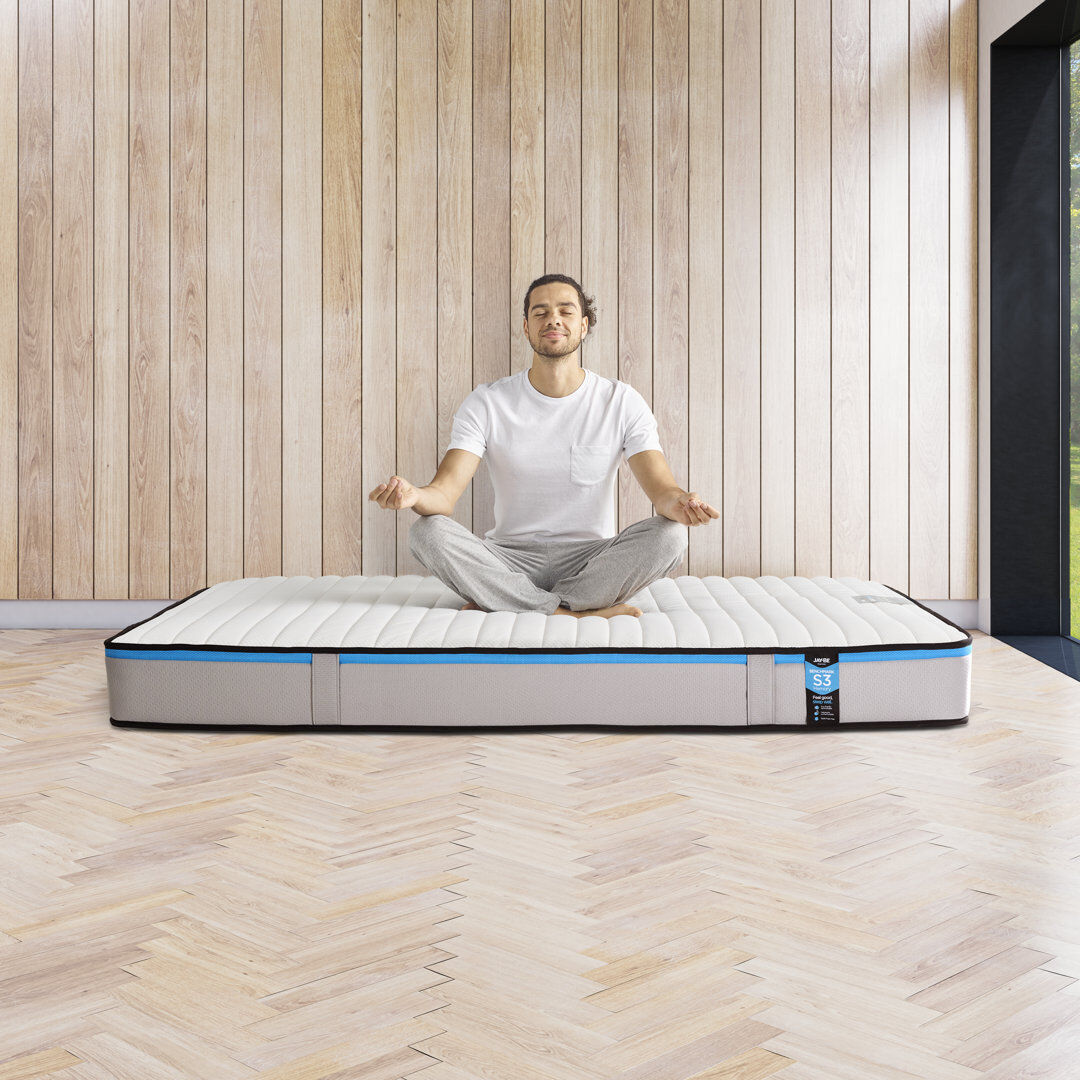
Jay-Be Benchmark S3 Memory Eco-Friendly Mattress Kingsize (5')The Jay-Be Benchmark S3 mattress features innovative sustainable sleep technologies. Combining a deep e-Spring core with supportive e-Fibre comfort layers, this mattress features Jay-Bes' revolutionary Memory e-Fibre which is a more environmentally friendly alternative to memory foam; offering pressure-relieving support throughout the night. Made in the UK and designed with the environment in mind, all Benchmark mattresses are 100% foam-free and feature Eco award-winning Advance e-Fibre™. This super-soft Advance e-Fibre not only helps improve moisture and temperature regulation but is also proven to offer significant environmental benefits* including • 90% Fewer CO2 emissions • 99% Less water used • 99% Reduced land use *Statistics are based on the life cycle analysis of Advance e-Fibre when compared to cotton. Results were verified by an independent body. The e-Fibre comfort layers used in these mattresses are made from 100% recyclable plastic bottles, diverting over 70 million from going into landfills or our oceans, and by choosing this mattress you are helping to prevent even more! Vacuum packed and rolled to maintain freshness and reduce carbon emissions during transportation. All Jay-Be Benchmark mattresses are backed by a five-year manufacturer’s guarantee. Brand Name: Jay-Be. Size: Kingsize (5')295,63 £*Shipping: 0,00 £Secure redirect to the provider
-
Jay-Be Benchmark S3 Memory Eco-Friendly Mattress Small Double (4')The Jay-Be Benchmark S3 mattress features innovative sustainable sleep technologies. Combining a deep e-Spring core with supportive e-Fibre comfort layers, this mattress features Jay-Bes' revolutionary Memory e-Fibre which is a more environmentally friendly alternative to memory foam; offering pressure-relieving support throughout the night. Made in the UK and designed with the environment in mind, all Benchmark mattresses are 100% foam-free and feature Eco award-winning Advance e-Fibre™. This super-soft Advance e-Fibre not only helps improve moisture and temperature regulation but is also proven to offer significant environmental benefits* including • 90% Fewer CO2 emissions • 99% Less water used • 99% Reduced land use *Statistics are based on the life cycle analysis of Advance e-Fibre when compared to cotton. Results were verified by an independent body. The e-Fibre comfort layers used in these mattresses are made from 100% recyclable plastic bottles, diverting over 70 million from going into landfills or our oceans, and by choosing this mattress you are helping to prevent even more! Vacuum packed and rolled to maintain freshness and reduce carbon emissions during transportation. All Jay-Be Benchmark mattresses are backed by a five-year manufacturer’s guarantee. Brand Name: Jay-Be. Size: Small Double (4')247,69 £*Shipping: 0,00 £Secure redirect to the provider
-
Silver Stone Store Steel Drill Bit Driver Wear Resistant, Ground Rod Driver Heavy Duty, Wide Compatibility Ground Rod Bits Socket round HandleUpgrade your toolset with the Ground Rod Driver Heavy Duty, engineered for professionals and DIY enthusiasts who demand reliability and performance. This Steel Drill Bit Driver Wear Resistant ensures longevity even under heavy use, providing...41,97 $*Shipping: 0,00 $Secure redirect to the provider
-
Inspire Daily Merch Ground Rod Driver Steel Drill Bit Wear Resistant For Rotar Compatibility round HandlePowerful 85mm Ground Rod Driver for Professional Use The Ground Rod Driver 85mm Heavy Duty Steel Drill Bit Driver is your perfect solution. Crafted from highquality, wearresistant steel, this drill bit is designed to endure tough conditions and...59,97 $*Shipping: 0,00 $Secure redirect to the provider


-
Are trophic levels and trophic levels the same thing in biology?
No, "trophic levels" and "trophic levels" are not the same thing in biology. "Trophic levels" refer to the hierarchical levels in an ecosystem based on an organism's position in the food chain, such as producers, primary consumers, secondary consumers, and so on. On the other hand, "trophic levels" appears to be a typographical error or a repetition of the term "trophic levels." In biology, it is important to use accurate and specific terminology to avoid confusion and miscommunication. **
-
Why do organisms become larger from trophic level to trophic level?
Organisms become larger from trophic level to trophic level due to the efficiency of energy transfer in ecosystems. As energy is transferred from one trophic level to the next, there is a loss of energy in the form of heat and metabolic processes. Larger organisms are able to consume more energy-rich food sources and have a more efficient metabolism, allowing them to grow in size as they move up the food chain. Additionally, larger organisms are better equipped to capture and consume prey, giving them a competitive advantage in obtaining energy and resources. **
-
Why do organisms get larger from trophic level to trophic level?
Organisms tend to get larger from one trophic level to the next because as energy is transferred up the food chain, there is a loss of energy at each level. This means that organisms at higher trophic levels need to consume larger quantities of organisms from lower trophic levels to obtain enough energy to sustain themselves. Additionally, larger organisms are more efficient at capturing and consuming prey, allowing them to thrive at higher trophic levels. Finally, larger organisms have a lower surface area to volume ratio, which helps them retain heat and energy more effectively. **
-
Why does the biomass decrease from trophic level to trophic level?
Biomass decreases from trophic level to trophic level because energy is lost as it moves through the food chain. Organisms at each trophic level use some of the energy they consume for their own metabolic processes, such as respiration and movement, and the rest is lost as heat. This means that there is less energy available to be passed on to the next trophic level, resulting in a decrease in biomass. Additionally, not all of the energy from one trophic level is consumed by the next level, as some is lost through waste and uneaten parts of organisms. **


What are trophic levels in biology?
Trophic levels in biology refer to the hierarchical levels in an ecosystem where organisms are grouped based on their feeding relationships. The primary producers, such as plants, are at the base of the trophic levels as they convert sunlight into energy through photosynthesis. Herbivores that feed on plants are at the next level, followed by carnivores that eat herbivores. Each trophic level represents a transfer of energy and nutrients through the ecosystem, with energy decreasing as it moves up the levels. **
What is the trophic level of omnivores?
Omnivores are organisms that consume both plants and animals, so their trophic level can vary. When they consume plants, they are considered primary consumers (herbivores) and when they consume animals, they are considered secondary consumers (carnivores). This means that omnivores can occupy multiple trophic levels within a food web, depending on their diet. **
Top-Angebote
Products related to Trophic:
-
Jay-Be Benchmark S3 Memory Eco-Friendly Mattress Single (3')The Jay-Be Benchmark S3 mattress features innovative sustainable sleep technologies. Combining a deep e-Spring core with supportive e-Fibre comfort layers, this mattress features Jay-Bes' revolutionary Memory e-Fibre which is a more environmentally friendly alternative to memory foam; offering pressure-relieving support throughout the night. Made in the UK and designed with the environment in mind, all Benchmark mattresses are 100% foam-free and feature Eco award-winning Advance e-Fibre™. This super-soft Advance e-Fibre not only helps improve moisture and temperature regulation but is also proven to offer significant environmental benefits* including • 90% Fewer CO2 emissions • 99% Less water used • 99% Reduced land use *Statistics are based on the life cycle analysis of Advance e-Fibre when compared to cotton. Results were verified by an independent body. The e-Fibre comfort layers used in these mattresses are made from 100% recyclable plastic bottles, diverting over 70 million from going into landfills or our oceans, and by choosing this mattress you are helping to prevent even more! Vacuum packed and rolled to maintain freshness and reduce carbon emissions during transportation. All Jay-Be Benchmark mattresses are backed by a five-year manufacturer’s guarantee. Brand Name: Jay-Be. Size: Single (3')189,00 £*Shipping: 0,00 £Secure redirect to the provider
-
Jay-Be Benchmark S3 Memory Eco-Friendly Mattress Double (4'6)The Jay-Be Benchmark S3 mattress features innovative sustainable sleep technologies. Combining a deep e-Spring core with supportive e-Fibre comfort layers, this mattress features Jay-Bes' revolutionary Memory e-Fibre which is a more environmentally friendly alternative to memory foam; offering pressure-relieving support throughout the night. Made in the UK and designed with the environment in mind, all Benchmark mattresses are 100% foam-free and feature Eco award-winning Advance e-Fibre™. This super-soft Advance e-Fibre not only helps improve moisture and temperature regulation but is also proven to offer significant environmental benefits* including • 90% Fewer CO2 emissions • 99% Less water used • 99% Reduced land use *Statistics are based on the life cycle analysis of Advance e-Fibre when compared to cotton. Results were verified by an independent body. The e-Fibre comfort layers used in these mattresses are made from 100% recyclable plastic bottles, diverting over 70 million from going into landfills or our oceans, and by choosing this mattress you are helping to prevent even more! Vacuum packed and rolled to maintain freshness and reduce carbon emissions during transportation. All Jay-Be Benchmark mattresses are backed by a five-year manufacturer’s guarantee. Brand Name: Jay-Be. Size: Double (4'6)263,67 £*Shipping: 0,00 £Secure redirect to the provider
-
Jay-Be Benchmark S3 Memory Eco-Friendly Mattress Kingsize (5')The Jay-Be Benchmark S3 mattress features innovative sustainable sleep technologies. Combining a deep e-Spring core with supportive e-Fibre comfort layers, this mattress features Jay-Bes' revolutionary Memory e-Fibre which is a more environmentally friendly alternative to memory foam; offering pressure-relieving support throughout the night. Made in the UK and designed with the environment in mind, all Benchmark mattresses are 100% foam-free and feature Eco award-winning Advance e-Fibre™. This super-soft Advance e-Fibre not only helps improve moisture and temperature regulation but is also proven to offer significant environmental benefits* including • 90% Fewer CO2 emissions • 99% Less water used • 99% Reduced land use *Statistics are based on the life cycle analysis of Advance e-Fibre when compared to cotton. Results were verified by an independent body. The e-Fibre comfort layers used in these mattresses are made from 100% recyclable plastic bottles, diverting over 70 million from going into landfills or our oceans, and by choosing this mattress you are helping to prevent even more! Vacuum packed and rolled to maintain freshness and reduce carbon emissions during transportation. All Jay-Be Benchmark mattresses are backed by a five-year manufacturer’s guarantee. Brand Name: Jay-Be. Size: Kingsize (5')295,63 £*Shipping: 0,00 £Secure redirect to the provider
-
Jay-Be Benchmark S3 Memory Eco-Friendly Mattress Small Double (4')The Jay-Be Benchmark S3 mattress features innovative sustainable sleep technologies. Combining a deep e-Spring core with supportive e-Fibre comfort layers, this mattress features Jay-Bes' revolutionary Memory e-Fibre which is a more environmentally friendly alternative to memory foam; offering pressure-relieving support throughout the night. Made in the UK and designed with the environment in mind, all Benchmark mattresses are 100% foam-free and feature Eco award-winning Advance e-Fibre™. This super-soft Advance e-Fibre not only helps improve moisture and temperature regulation but is also proven to offer significant environmental benefits* including • 90% Fewer CO2 emissions • 99% Less water used • 99% Reduced land use *Statistics are based on the life cycle analysis of Advance e-Fibre when compared to cotton. Results were verified by an independent body. The e-Fibre comfort layers used in these mattresses are made from 100% recyclable plastic bottles, diverting over 70 million from going into landfills or our oceans, and by choosing this mattress you are helping to prevent even more! Vacuum packed and rolled to maintain freshness and reduce carbon emissions during transportation. All Jay-Be Benchmark mattresses are backed by a five-year manufacturer’s guarantee. Brand Name: Jay-Be. Size: Small Double (4')247,69 £*Shipping: 0,00 £Secure redirect to the provider
-
What are trophic levels and trophic structures?
Trophic levels refer to the hierarchical levels in an ecosystem through which energy and nutrients flow. They represent the feeding positions of different organisms in a food chain or food web. Trophic structures, on the other hand, describe the organization of these trophic levels within an ecosystem. This includes the distribution of energy and nutrients among different organisms, as well as the interactions and relationships between them. Overall, trophic levels and trophic structures are important concepts for understanding the flow of energy and nutrients in ecosystems and the dynamics of food chains and food webs. **
-
Are trophic levels and trophic levels the same in biology?
No, trophic levels and trophic levels are not the same in biology. Trophic levels refer to the hierarchical levels in an ecosystem based on an organism's position in the food chain, such as producers, primary consumers, secondary consumers, etc. On the other hand, trophic cascades are the indirect effects that occur when a change in one trophic level impacts other trophic levels in the ecosystem. Both concepts are important in understanding the dynamics of energy flow and interactions within ecosystems. **
-
Are trophic levels and trophic levels the same thing in biology?
No, "trophic levels" and "trophic levels" are not the same thing in biology. "Trophic levels" refer to the hierarchical levels in an ecosystem based on an organism's position in the food chain, such as producers, primary consumers, secondary consumers, and so on. On the other hand, "trophic levels" appears to be a typographical error or a repetition of the term "trophic levels." In biology, it is important to use accurate and specific terminology to avoid confusion and miscommunication. **
-
Why do organisms become larger from trophic level to trophic level?
Organisms become larger from trophic level to trophic level due to the efficiency of energy transfer in ecosystems. As energy is transferred from one trophic level to the next, there is a loss of energy in the form of heat and metabolic processes. Larger organisms are able to consume more energy-rich food sources and have a more efficient metabolism, allowing them to grow in size as they move up the food chain. Additionally, larger organisms are better equipped to capture and consume prey, giving them a competitive advantage in obtaining energy and resources. **
Similar search terms for Trophic
-
Silver Stone Store Steel Drill Bit Driver Wear Resistant, Ground Rod Driver Heavy Duty, Wide Compatibility Ground Rod Bits Socket round HandleUpgrade your toolset with the Ground Rod Driver Heavy Duty, engineered for professionals and DIY enthusiasts who demand reliability and performance. This Steel Drill Bit Driver Wear Resistant ensures longevity even under heavy use, providing...41,97 $*Shipping: 0,00 $Secure redirect to the provider
-
Inspire Daily Merch Ground Rod Driver Steel Drill Bit Wear Resistant For Rotar Compatibility round HandlePowerful 85mm Ground Rod Driver for Professional Use The Ground Rod Driver 85mm Heavy Duty Steel Drill Bit Driver is your perfect solution. Crafted from highquality, wearresistant steel, this drill bit is designed to endure tough conditions and...59,97 $*Shipping: 0,00 $Secure redirect to the provider
-
Inspired Deals Precision Digital Thickness Gauge 025.4mm With 0.01mm Resolution Precision Digital Thickness Gauge 025.4mm With 0.01mm ResolutionGet dependable measurements in seconds and take the guesswork out of material selection and quality checks. This digital thickness gauge measures from 025.4mm with 0.01mm resolution and approximately 0.02mm tolerance for consistent everyday...64,97 $*Shipping: 0,00 $Secure redirect to the provider
-
Inspired Deals Ergonomic Memory Foam Chair Armrest Cushion Pads For Office Desk And Gaming Chairs Ergonomic Memory Foam Chair Armrest Cushion Pads For Office Desk And Gaming ChairsExperience allday comfort while you work, game, or study with these chair armrest cushions designed to reduce elbow and wrist strain. Made with soft velboa polyester and premium memory foam, these cushions provide gentle support that helps ease...39,97 $*Shipping: 0,00 $Secure redirect to the provider
-
Why do organisms get larger from trophic level to trophic level?
Organisms tend to get larger from one trophic level to the next because as energy is transferred up the food chain, there is a loss of energy at each level. This means that organisms at higher trophic levels need to consume larger quantities of organisms from lower trophic levels to obtain enough energy to sustain themselves. Additionally, larger organisms are more efficient at capturing and consuming prey, allowing them to thrive at higher trophic levels. Finally, larger organisms have a lower surface area to volume ratio, which helps them retain heat and energy more effectively. **
-
Why does the biomass decrease from trophic level to trophic level?
Biomass decreases from trophic level to trophic level because energy is lost as it moves through the food chain. Organisms at each trophic level use some of the energy they consume for their own metabolic processes, such as respiration and movement, and the rest is lost as heat. This means that there is less energy available to be passed on to the next trophic level, resulting in a decrease in biomass. Additionally, not all of the energy from one trophic level is consumed by the next level, as some is lost through waste and uneaten parts of organisms. **
-
What are trophic levels in biology?
Trophic levels in biology refer to the hierarchical levels in an ecosystem where organisms are grouped based on their feeding relationships. The primary producers, such as plants, are at the base of the trophic levels as they convert sunlight into energy through photosynthesis. Herbivores that feed on plants are at the next level, followed by carnivores that eat herbivores. Each trophic level represents a transfer of energy and nutrients through the ecosystem, with energy decreasing as it moves up the levels. **
-
What is the trophic level of omnivores?
Omnivores are organisms that consume both plants and animals, so their trophic level can vary. When they consume plants, they are considered primary consumers (herbivores) and when they consume animals, they are considered secondary consumers (carnivores). This means that omnivores can occupy multiple trophic levels within a food web, depending on their diet. **
* All prices are inclusive of VAT and, if applicable, plus shipping costs. The offer information is based on the details provided by the respective shop and is updated through automated processes. Real-time updates do not occur, so deviations can occur in individual cases. ** Note: Parts of this content were created by AI.